Theogony
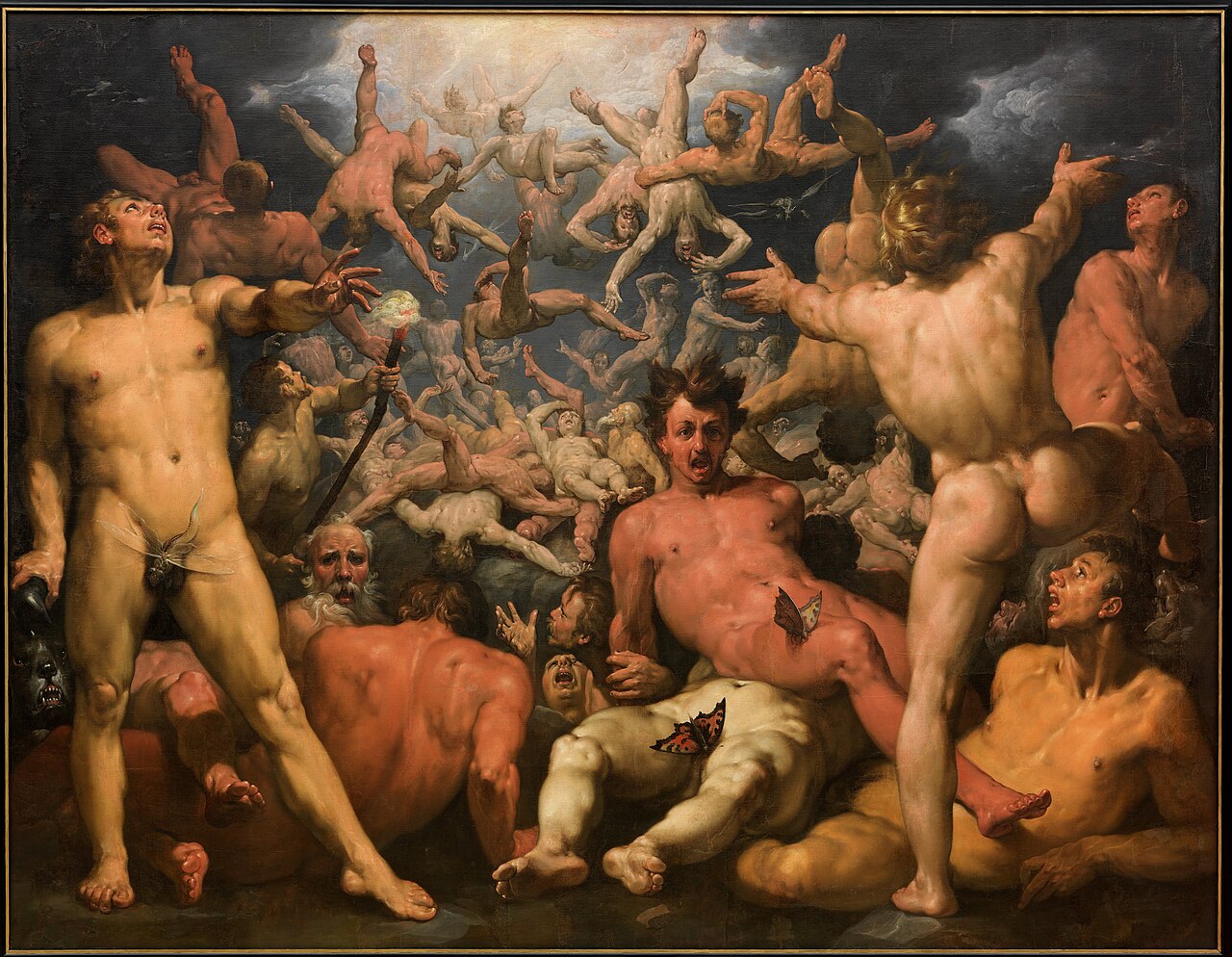
Theogony (Θεογονία, literally “the birth of the gods”) is a poem by Hesiod describing the origins of the Greek gods. It was likely composed around 730–700 BCE, with the written form established around the 6th century BCE.
N.B. I have only read the following excerpt.
The Spirits of Night
And Night bare hateful Doom and black Fate and Death, and she bare Sleep and the tribe of Dreams. And again the goddess murky Night, though she lay with none, bare Blame and painful Woe, and the Hesperides who guard the rich, golden apples and the trees bearing fruit beyond glorious Ocean. Also she bare the Destinies and ruthless avenging Fates, Clotho and Lachesis and Atropos, who give men at their birth both evil and good to have, and they pursue the transgressions of men and of gods: and these goddesses never cease from their dread anger until they punish the sinner with a sore penalty. Also deadly Night bare Nemesis (Indignation) to afflict mortal men, and after her, Deceit and Friendship and hateful Age and hard-hearted Strife.
But abhorred Strife bare painful Toil and Forgetfulness and Famine and tearful Sorrows, Fightings also, Battles, Murders, Manslaughters, Quarrels, Lying Words, Disputes, Lawlessness and Ruin, all of one nature, and Oath who most troubles men upon earth when anyone wilfully swears a false oath.1
Here, Strife is the mother of a whole family of human evils. Oath (Horkos) is one of the divine enforcers of oaths, cursing any human who swears a false [[oath]].
⚡️ Spark note: This note is preliminary and will likely be expanded later.
-
Hesiod. Homeric Hymns, Epic Cycle, Homerica. Translated by Hugh G. Evelyn-White. The Loeb Classical Library 57. Harvard university press W. Heinemann, 1914. ↩